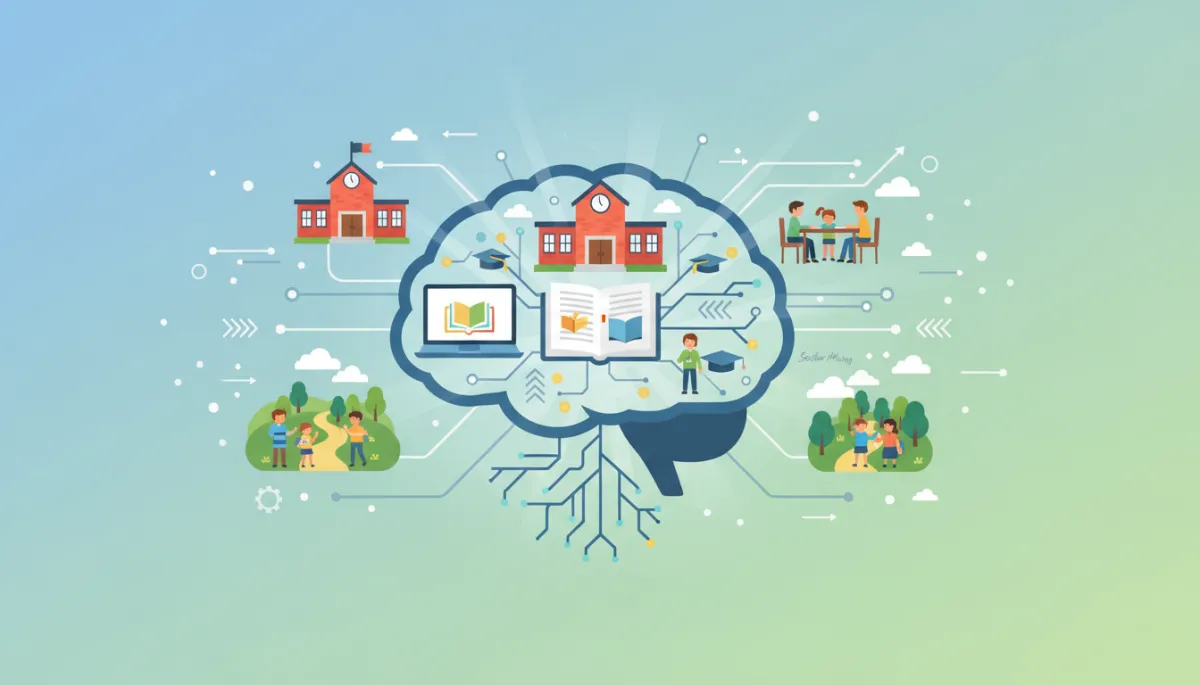
Educational Freedom: Sector Mixing Trends
Educational Freedom, School Choice, Sector Mixing, Homeschooling Trends
Expanding Educational Freedom: How Sector Mixing Is Reshaping Learning at Home and School
Across the country, families are quietly rewriting the rules of schooling. Instead of choosing one “right” option, they’re blending learning environments in creative ways that fit their real lives and real children. Researchers call this education sector mixing, and the latest data show it’s no fringe experiment—it’s becoming the new normal.
What Is Education Sector Mixing, Really?
When we talk about Educational Freedom, we often picture a menu of choices: neighborhood schools, charter schools, private schools, homeschooling, virtual programs. Sector mixing is what happens when families stop treating that menu as either–or and start treating it as both–and.
A child might attend a public school four days a week, homeschool one day, and take an online algebra course and a community college art class. Another might be homeschooled for core subjects but join the local high school for band and soccer. Sector mixing simply means combining learning from more than one sector—public, private, charter, online, or home—to create a custom-fit education.
What the Cambridge Journal of Education Study Tells Us
A 2026 article in the Cambridge Journal of Education by Albert Cheng, Angela Watson, and Matthew Lee gives us the clearest picture yet of this trend. Using three waves of the National Household Education Survey, they analyzed sector mixing among U.S. homeschooling families. Their findings are striking: about 53% of homeschooling households are mixing sectors in some way.
In other words, more than half of homeschooling families are not “all or nothing.” Many are sending one child to a traditional school while homeschooling another, or they’re weaving in public school classes, private tutors, or virtual charters. The study also found that sector mixing is more common when families are motivated by child-level needs—for example, a specific learning difference or social concern—rather than broad, household-wide reasons like a particular philosophy or religious conviction.
💡 Friendly Insight: If you’ve ever adjusted schooling for one child but not another, you’re already practicing sector mixing—even if you never called it that.
How Families Are Combining School Environments Day to Day
In my work with families, I see sector mixing show up in wonderfully practical ways. A few common patterns:
Hybrid homeschoolers who attend a charter or private program two or three days a week and learn at home the rest of the time. Many of these families partner with programs like www.beamh2o.org, which provide structured, community-based learning while preserving the flexibility and personalization of home education.
Public school plus extras, where students stay enrolled in their neighborhood school but supplement with online AP courses, dual-enrollment college classes, or specialized tutoring. Organizations such as Beam Education Institute, www.beameducation.org, and www.beammicroschool.org offer public schools professional learning, innovative microschool partnerships, and enrichment pathways that layer on top of the traditional school day.
Selective participation, especially for homeschoolers: joining school sports, theater, or STEM labs while keeping core academics at home.
These patterns line up with the Cambridge study’s observation that sector mixing often emerges in larger families and in homes where both parents work. It’s a flexible strategy for juggling schedules, finances, and children’s different strengths—one reason Homeschooling Trends now look far more diverse than the stereotypes suggest.

Thoughtful partnerships let public schools and homeschoolers share courses, labs, and activities.
School Choice Is Fueling the Rise of Sector Mixing
None of this happens in a vacuum. The growth of School Choice programs is creating the conditions where sector mixing can flourish. According to the American Legislative Exchange Council’s 2026 Index of State Education Freedom, states like Florida, Arizona, Arkansas, Iowa, and West Virginia are leading the way with robust options: education savings accounts (ESAs), open enrollment, charter schools, and virtual learning. Texas, Idaho, and Wyoming have all climbed the rankings as they expand similar policies.
National data from EdChoice and the National Center for Education Statistics show steady growth in charter enrollment and other choice mechanisms. As these programs spread, families gain not just the ability to switch schools, but the freedom to combine them—turning School Choice into genuine Educational Freedom.
Why Sector Mixing Can Benefit Both Traditional Schools and Homeschoolers
It’s easy to frame different schooling sectors as competitors, but sector mixing invites us to see them as partners. Traditional public schools can benefit when part-time or dual-enrolled students bring additional funding, enrich extracurriculars, and broaden the community they serve. Offering à la carte classes—say, chemistry lab or orchestra—can showcase a school’s strengths and build goodwill with families who might otherwise feel shut out.
Homeschooling families, in turn, gain access to resources that are hard to replicate at home: science labs, team sports, specialized instructors, peer collaboration. The Cambridge Journal of Education study reminds us that many families choose homeschooling for a specific child’s needs, not as an all-encompassing ideology. For them, sector mixing is a compassionate middle path—preserving the personalization of home education while drawing on the strengths of traditional schools and community programs.
Policy Reforms That Support Healthy Sector Mixing
For sector mixing to work well, policy has to catch up with practice. Too often, state laws and district rules assume a single, full-time enrollment in one school. Families who try to blend options run into barriers: funding that doesn’t follow the student across settings, rigid attendance rules, or bans on homeschoolers joining public school classes or teams.
Flexible enrollment policies that allow part-time participation across sectors.
Portable funding through ESAs or similar tools, so dollars follow students to the mix of services they actually use.
Clear pathways for collaboration between districts, charters, private schools, and homeschool co-ops.
Thoughtful policy reforms like these don’t privilege one model over another. Instead, they honor what the data from the Cambridge study and national School Choice reports are already telling us: families are mixing sectors because it helps their children thrive. Our laws should make that easier, not harder.
Looking Ahead: A More Flexible, Humane Education Landscape
Educational Freedom is not about winning an argument for or against any single type of school. It’s about trusting families to combine the best of different worlds—home, community, and classroom—in ways that respect each child’s story. As sector mixing becomes more visible in the research and in everyday life, we have an opportunity to design policies and partnerships that reflect this new reality with warmth, flexibility, and care.
📌 Key Takeaway & Next Step: Sector mixing is giving families practical, compassionate ways to personalize learning—drawing on the strengths of public schools, homeschools, charters, and community programs all at once. If you’d like help mapping out a flexible education plan, exploring policy options in your state, or connecting with like-minded families, visit www.beameducation.org to learn more and take the next step toward Educational Freedom.


