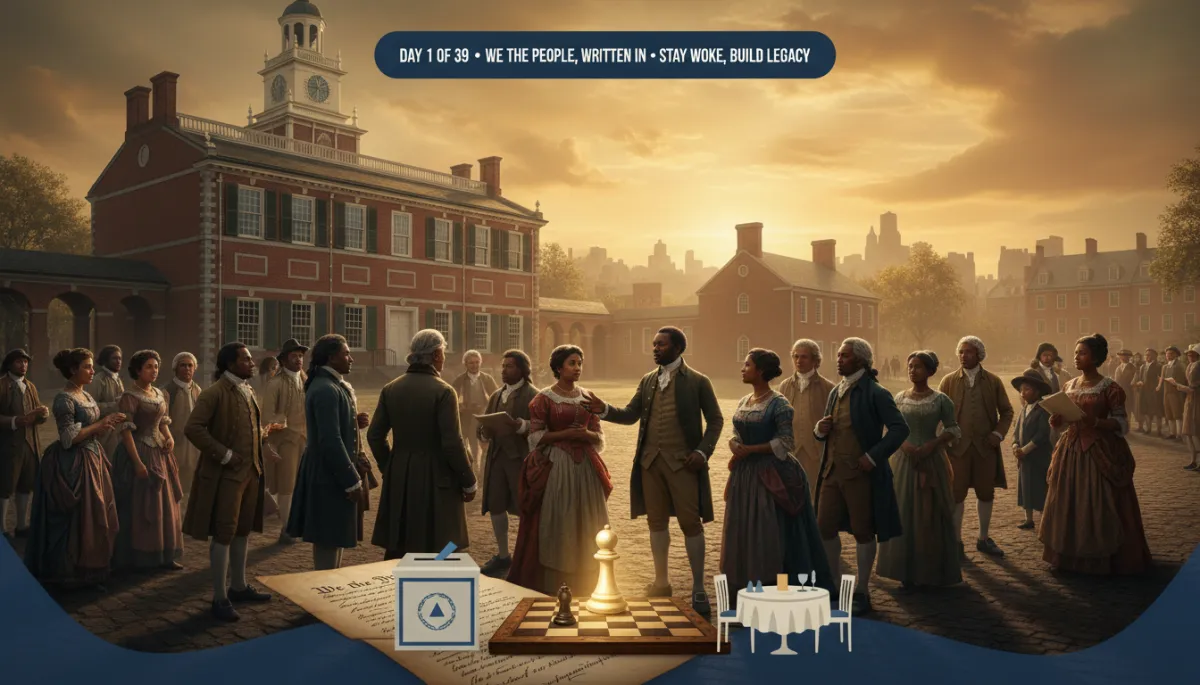
A Hot Summer in Philadelphia: 1787 Convention
DAY 1 OF 39 • WE THE PEOPLE, WRITTEN IN • STAY WOKE. BUILD LEGACY.
Civic Education, Constitutional Convention 1787, Constitution History for Kids
A Hot Summer in Philadelphia: Who Was in the Room?
On a blazing summer in 1787, a group of powerful men shut the doors of a brick building in Philadelphia and wrote the rules for a new nation. Today, we are going back to that room—and to the streets just outside—to ask who was included, who was left out, and what that means for our families now.
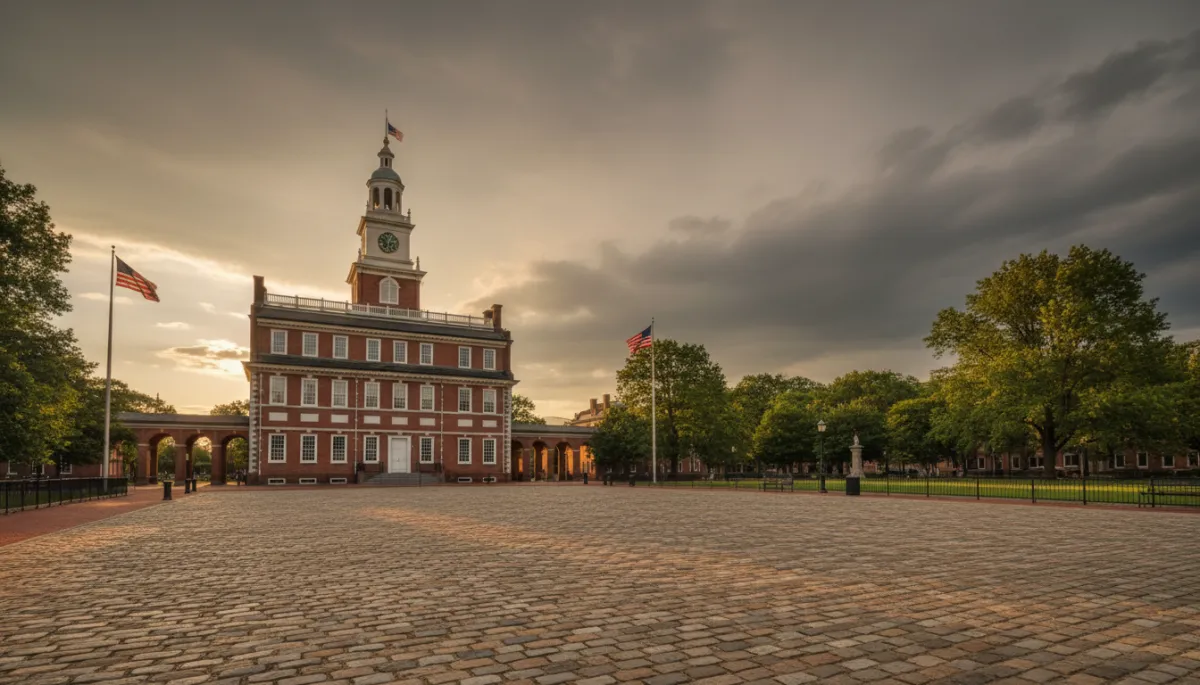
A Locked Room in a Hot City
Close your eyes for a moment and picture this with your family. It is June 1787. The air in Philadelphia is thick and sticky. Horses kick up dust in the streets. The smell of sweat, smoke, and the river hangs over the city. Inside Independence Hall, 55 men gather in a big room with tall windows. But the windows are shut. The doors are locked. Guards stand outside so no one can listen in.
These men are all white. Most are wealthy. All own property. Many own other human beings. There are no women, no enslaved people, no Indigenous leaders, no poor farmers in that room. Yet the paper they are writing—the Constitution—will shape the lives of every person in the new United States and generations to come (National Archives).
Who Was in the Room at the Constitutional Convention 1787?
The meeting in that hot room is called the Constitutional Convention 1787. The states sent delegates—representatives—to fix the old government and write something new. One of the most famous men there was George Washington. He sat at the front as the presiding officer, calm and serious, his presence helping everyone stay in line (Library of Congress).
Another key figure was James Madison, a small man with a big pen. He took careful notes almost every day. Because of his writing, we have a window into what the men argued about and how they made choices. Then there was Benjamin Franklin, the oldest delegate at 81 years old. His body was weak, but his mind was sharp. When a woman later asked him what kind of government they had created, he is said to have replied, “a republic, if you can keep it” (reported by early historians and shared by the National Constitution Center).
One state, Rhode Island, refused to come at all. Rhode Island sent no delegates. They did not trust this new plan and worried about giving more power to a central government (Smithsonian and Library of Congress sources).
Who Was Just Outside the Room?
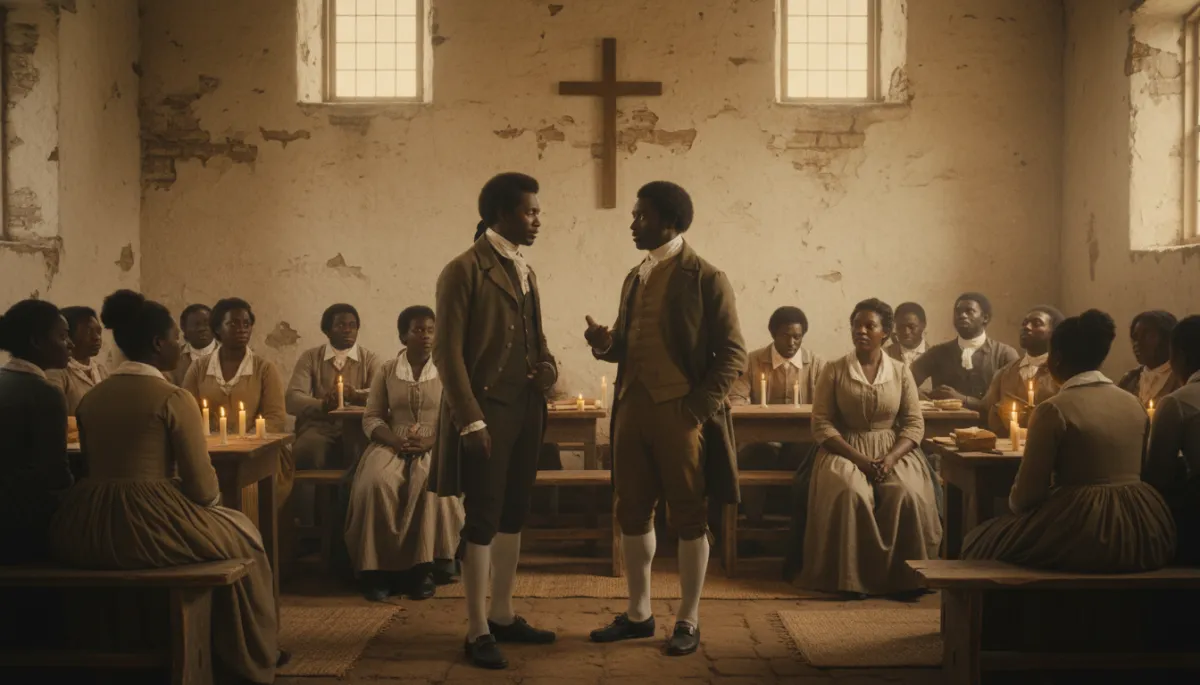
Free Black Philadelphians organized faith, aid, and mutual support while excluded from power.
Now let us step outside those locked doors and walk a few blocks through the city. While the delegates argue inside, something powerful is happening in Philadelphia’s streets and meeting houses. Philadelphia had the largest free Black community in America in 1787 (Smithsonian, PBS). Black families were working, worshiping, and building their own institutions, even as slavery still existed in many places.
Two leaders in this community were Richard Allen and Absalom Jones. Both had been enslaved. Both gained their freedom. In 1787, the same year as the Convention, they helped start the Free African Society—a mutual aid group for free Black people in Philadelphia (Free African Society Richard Allen, documented by the Library of Congress and PBS). They raised money for people in need, supported widows and orphans, and created a spiritual home where Black people could worship with dignity.
Think about that for a moment as a family. While 55 white men wrote rules for the nation, Black leaders just down the street were writing a different kind of document—a living document of community, faith, and survival. Their names are not in the Constitution, but their work helped shape America too.
The Constitution They Built—and Its Gaps
So what did the men in Independence Hall actually create? The Constitution set up a new government with three branches—Congress, the President, and the courts. It used checks and balances so no one branch could easily take over. This was a bold idea in a world filled with kings and queens (National Archives, Constitution history for kids resources).
But there were painful gaps. To keep the Southern slaveholding states in the union, the delegates made deals that protected slavery. One was the three-fifths clause. It said that when counting the population for seats in Congress, enslaved people would count as “three fifths” of a person. Another deal allowed the slave trade to continue until 1808 (National Archives, Library of Congress).
The word “slave” never appears in the original Constitution. Instead, it uses phrases like “persons held to service”. In simple terms, that means people who were forced to work for others, without pay, under the law. The delegates chose soft words to hide a hard truth. For our families today, it is important to say the truth out loud: the Constitution protected slavery at the start, even as it promised freedom and justice.

Even the smallest piece on the board can change the whole game.
🍽️ Family Table Talk
- If you were alive in 1787, would your family have been in the room? Why or why not? Think about race, gender, money, and land ownership together.
- Richard Allen and Absalom Jones built something new when the system left them out. What is something your family has built or created when you were left out—a business, a group chat, a ministry, a family tradition?
- When you hear Franklin’s words, “a republic, if you can keep it,” what does that mean to you today? What does it ask of us as voters, neighbors, and family members?
As we start this 39-day journey together, remember: We the People is still being written in. Our families, our votes, our stories, and our everyday choices are part of that living document. The men in the hot room in 1787 began something. The people just outside the room, like Richard Allen and Absalom Jones, pushed it forward. Now it is our turn.
BEAM Resources for Your Family
- BEAMEducation.org — civic education for every family, with tools to keep “We the People” real at your dinner table.
- BEAMH2O.org — homeschool and supplemental resources that center Black and multicultural stories in Constitution history for kids.
- BEAMMicroschool.org — in-person learning for ages 5–10 in North Texas, where our children learn that they are not just pieces on the board—they are future authors of the rules.


