Small by Design: What the Microschool Movement Means for Your Child
Reflections in the voice of Dr. Andrea Long-Nelson, B.E.A.M.
Friends, let me tell you about a school where a cooking lesson turned into something no one saw coming.
At a small school in Fort Lauderdale called Colossal Academy, a lesson about food grew into a study of history, geography, and culture. And then it grew again — into a student-run farm, where children leased land, built what they needed, and learned that education can be hands-on, inspiring, and still rigorous. The founder, a former public school teacher, was tired of the one-size-fits-all model. So she built something smaller. Something closer. Something that could actually see each child.
That school is part of a movement that is quietly reshaping American education. They're called microschools, and right now they're serving an estimated one to two million children across this country. I want to walk you through what they are, who they're for, and why B.E.A.M. is proud to be part of this story.
What Is a Microschool, Really?
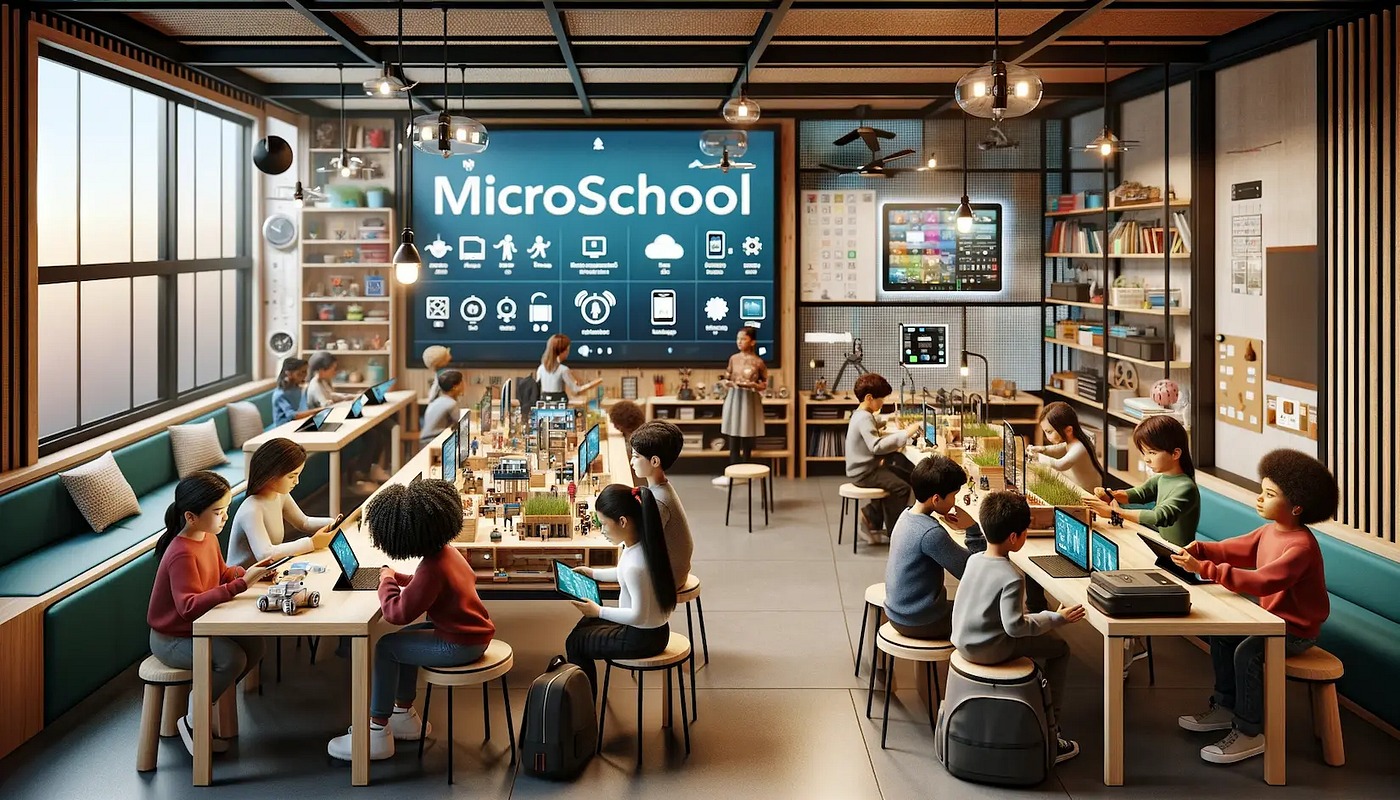
A microschool is a small, community-based learning environment — often anywhere from five to one hundred students. That's it. The number is small on purpose. When a classroom is small, a teacher can actually know your child: how they learn, what lights them up, where they get stuck, and what they need to move forward.
These schools are built to be flexible and personal. Some mix age groups, the way a family does. Some use project-based learning, where children build and create instead of just memorize. Many operate as learning hubs, partnering with local businesses, museums, churches, and community organizations so that learning reaches beyond four walls. They take the best of the old one-room schoolhouse and reimagine it for today.
Who Is This For? Maybe Your Child.
Here's what surprised me most. Microschools aren't just for one kind of family. When researchers looked at who attends, they found that forty-three percent of students came from traditional public schools, thirty percent came from homeschooling, and the rest came from private and charter schools. These are ordinary families, from every background, who simply wanted something more personal for their children.
And this is the part that moved me. Many of these children did not arrive ahead. Founders report that sixty-three percent of their students entered two or more grade levels behind. Nearly four in ten come from households below the average income. In other words, these schools are often catching the very children our larger systems have let slip through — and they are lifting them.
Small Enough to See Every Child
Does small actually work? The early answer is yes. Among microschool leaders who track academic growth, eighty-one percent of students gained between one and two years of growth in a single school year. Another sixteen percent gained between two and three years. Let that settle for a moment. Children who came in behind are not just keeping pace. Many are catching up, and then some.
This is what happens when a child is truly seen. Not managed. Not moved along a conveyor belt. Seen. Instruction is tailored to each student, so a child can move quickly through what comes easily and slow down for what doesn't. That efficiency creates something precious: extra time in the day for enrichment that deepens learning instead of replacing it.
Built on Relationships, Not Just Buildings
If you've followed B.E.A.M. for any length of time, you know where my heart lives. It lives in relationships. A microschool is not powerful because of its square footage. It is powerful because of the bonds inside it.
Environments are spaces. Ecosystems are relationships. And relationships are where transformation happens. — Dr. Andrea Long-Nelson
That's why so many microschools are rooted in the history and strengths of marginalized groups. Some were built by mothers who refused to wait for a system to serve their children. Networks like Black Mothers Forum Microschools and For the Culture Homeschool exist for exactly this reason — to deliver learning that is relevant, engaging, and rooted in who our children are. That is not a side note to the movement. For many of us, it is the whole point.
This Movement Is Growing — and Doors Are Opening
For a long time, families who wanted a school like this had to find a way to pay for it alone. That's changing. Across the country, lawmakers are making room for microschools to exist and for public dollars to follow children to the learning environment that fits them best. In Florida, a single law opened roughly fifty thousand potential new locations where microschools can operate, from community centers to museums to churches. Here in Texas, districts like San Antonio are experimenting with microschools in the neighborhoods that need them most. And new scholarship tax credit programs are beginning to lower the financial barrier for families who never thought a school like this was within reach.
The demand is not slowing down. Parents want it. Teachers want it. And the doors, slowly but surely, are opening wider.
Where B.E.A.M. Fits In
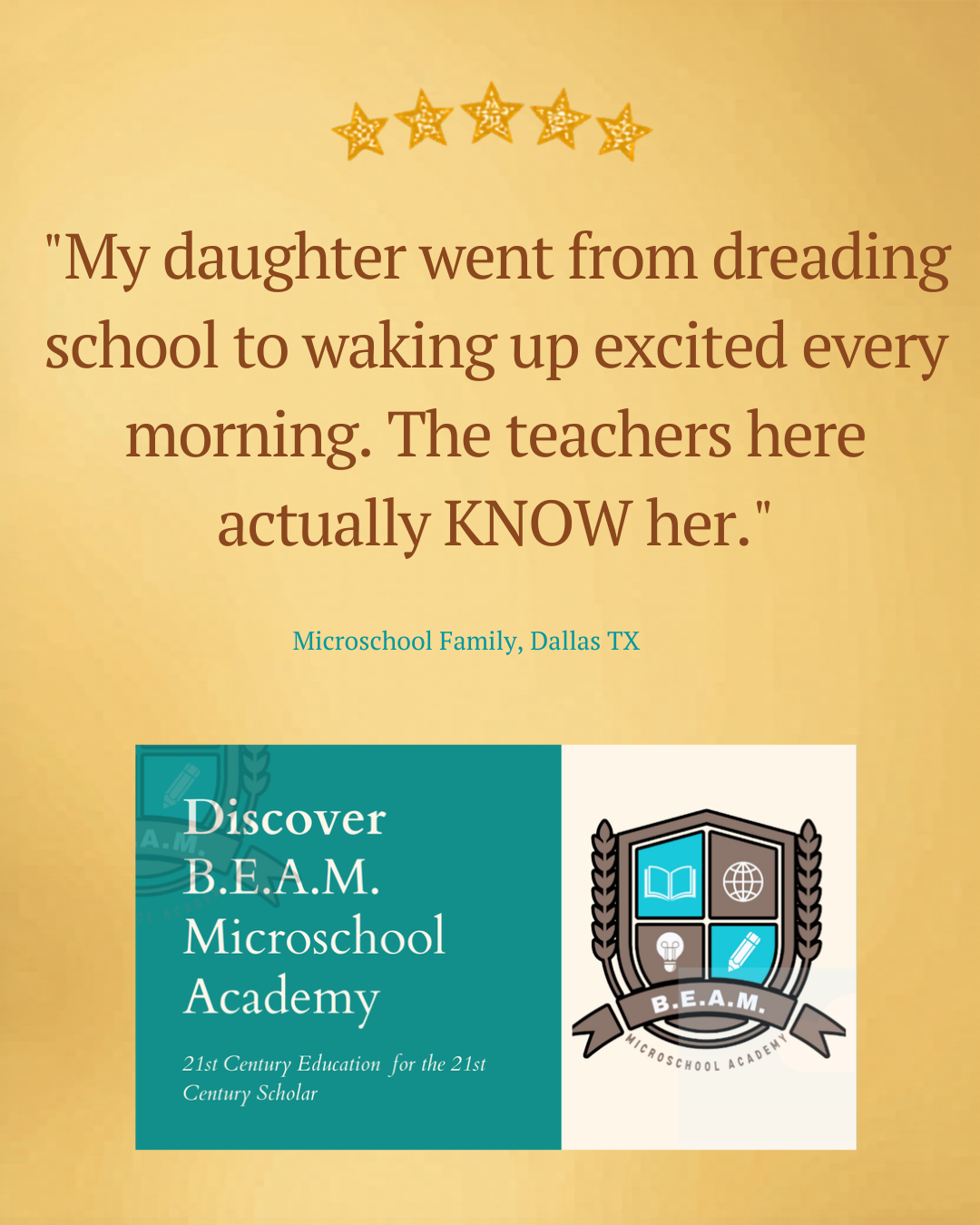
This is the movement B.E.A.M. was born for. B.E.A.M. Microschool Academy is opening its doors for Fall 2026, and we are gathering our first fifty founding families right now. We are building a place where children ages five to ten are known by name, challenged at their level, and grounded in the full history of the communities they come from. It is small by design, because that is where transformation happens.
If any part of this stirred something in you, I would love for you to come and see what we're building.
Come meet us and learn about becoming a founding family at www.beammicroschool.org. Learn more about our broader mission, and consider a tax-deductible gift, at www.beameducation.org. And if you have a little one ages five to ten, explore B.E.A.M. H2O at www.beamh2o.org.
With hope, Dr. Andrea Long-Nelson B.E.A.M.
Source: "An Introduction to Microschools: Promise, Practice, and Policy," Education Reform Now (2026).


