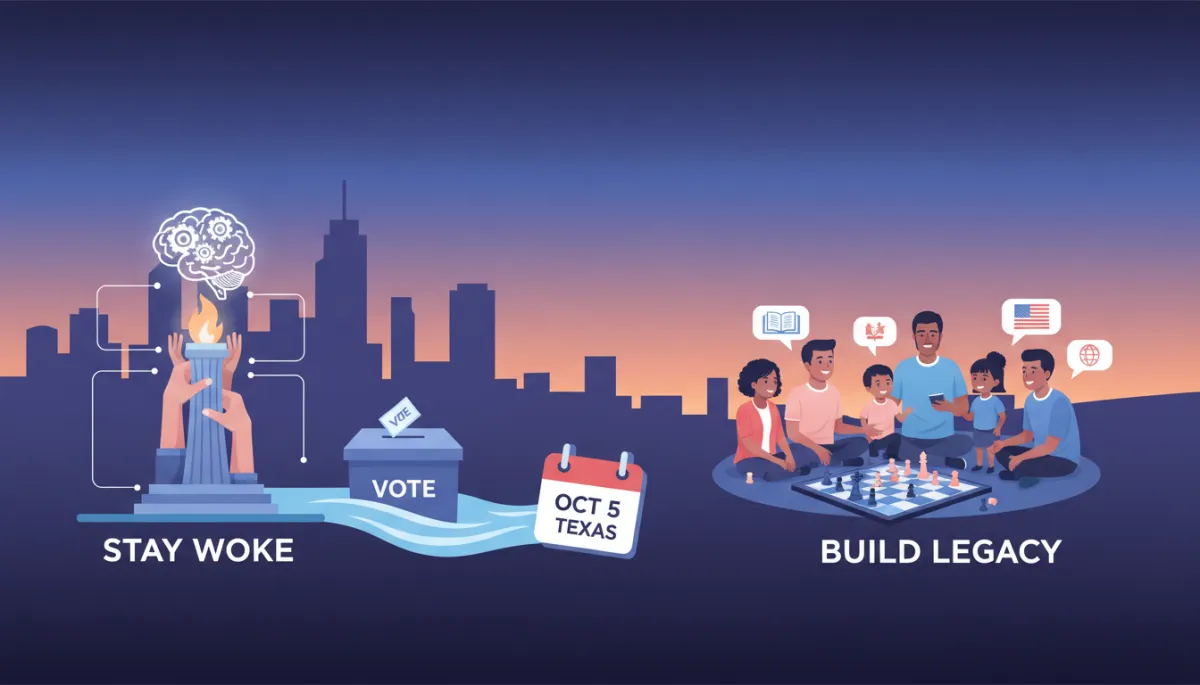
Stay Woke: Civic Engagement & Family Legacy
Civic Engagement, Voting Registration, Family Game Night
STAY WOKE. BUILD LEGACY.
Staying woke is more than a slogan; it is a family strategy for protecting American Democracy and building a legacy that lasts beyond one election cycle. When we treat voting registration, civic engagement, and even Family Game Night as shared responsibilities, we teach the next generation how to think critically, act collectively, and show up for their community.
Stay Woke. Build Legacy.
Turning family conversations into powerful civic engagement
Our First Week in One Minute
This week we stood at the starting line of American democracy. Here is what we learned:
Day 1: The Constitution was written in secret by 55 white men. Outside the room, Richard Allen and Absalom Jones started the Free African Society.
Day 2: The Three-Fifths Compromise counted enslaved people to give their enslavers more power.
Day 3: Only about 6 out of 100 people could vote in 1789. New Jersey let some women and free Black people vote, then took it back.
Day 4: The Bill of Rights made great promises, but for a long time they did not protect everyone.
Day 5: Native nations were governing themselves long before 1787, yet were among the last to be recognized as citizens.
Day 6: Free Black men voted in several states, until those states pushed them out.
The big idea: “We the People” started small. It grew because ordinary people pushed it to grow. And it can shrink again if we stop paying attention.
Stay Woke: Why Voting Registration Comes First
Legacy begins with a simple but powerful act: registering to vote. In Texas, the deadline to register or update your registration for the November 3, 2026 General Election is Monday, October 5, 2026. Because the 30th day before the election falls on a Sunday, state law extends the deadline to the next business day, giving Texans until October 5 to make their voices count (Texas Secretary of State, sos.state.tx.us).
Your application must be postmarked on or before October 5 or received in person by that date. If you mail it, consider visiting a USPS retail counter and requesting a manual postmark to ensure the date is clear and valid. Staying woke means knowing the rules, meeting the deadlines, and helping friends and family do the same (VoteTexas.gov).
💡 Pro Tip: Make “Voting Registration Check” a weekend task: verify everyone’s status online, print applications for those not yet registered, and walk them through the process together.
Family Conversations About American Democracy
Building legacy means talking openly about what American Democracy really is—and what it looks like in your neighborhood. Around the dinner table or during a relaxed weekend breakfast, invite questions like:
What rights and responsibilities do we have as voters in Texas?
Which local issues—schools, public safety, housing, jobs—matter most to our family?
How have people in our family or community fought for the right to vote?
These discussions turn abstract terms like American Democracy into real stories and real choices. Children learn that their family’s values connect directly to ballots, policies, and leaders chosen at the local, state, and national levels. In a state as influential as Texas, where elections shape everything from education to energy policy, every informed vote strengthens the community (Texas Tribune; Dallas Morning News reporting on Texas elections).
Family Game Night: Pawn Wars and Strategic Civic Thinking
Family Game Night is a perfect setting to weave in Civic Engagement in a fun, low-pressure way. One powerful idea is a game we will call Pawn Wars, inspired by chess but focused on community strength and strategic thinking.
In Pawn Wars, every pawn represents a neighbor, a friend, or a family member. The goal is not just to “win,” but to protect and empower as many pawns as possible. You can:
Assign each pawn a role—teacher, nurse, small business owner, elder, or student—and talk about what policies might help or harm them.
Reward cooperative strategies: if two players team up to protect more pawns, everyone earns points, mirroring how collective action works in real communities.
Pause after key moves to ask, “What does this teach us about planning ahead for elections or community decisions?”
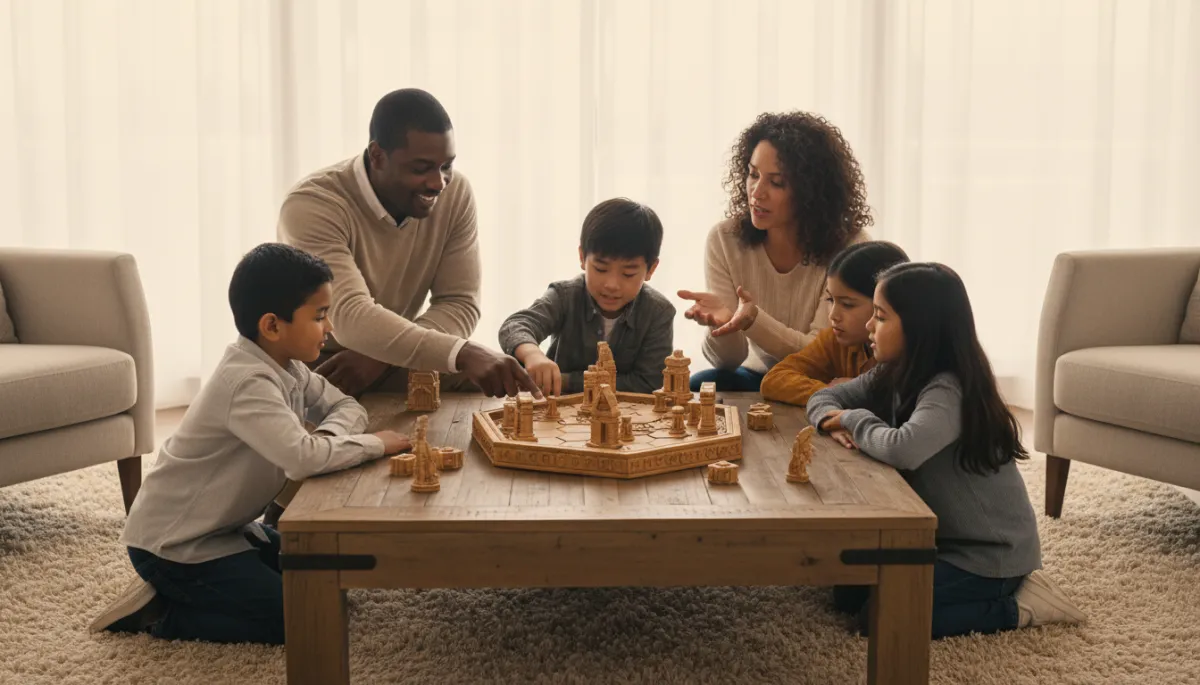
Strategy games like Pawn Wars turn family time into lessons in power, planning, and community.
By framing the game around neighbors and shared goals, children see that strong communities are not accidents; they are built through intention, cooperation, and smart choices—just like elections.
Building a Family Plan for the Upcoming Election
To truly Build Legacy, turn your values into a clear, written family plan for the 2026 election. Here is a simple framework you can adapt:
Registration Checkpoint: By mid-September, confirm each eligible family member’s registration status. Help young adults register as soon as they are eligible, and mark October 5, 2026 as a non-negotiable deadline on the family calendar.
Research Night: Choose one evening to read about the candidates and issues together. Older kids can research topics like schools, healthcare, or local safety and present what they find.
Sample Ballot Review: When sample ballots are available, walk through them as a family. Discuss how each choice connects back to your shared values and the people represented in Pawn Wars.
Election Day Logistics: Decide who is driving, what time you will go, and whether you will vote early or on Election Day. Arrange childcare, rides for elders, or time off work if needed.
Post‑Election Reflection: After the election, talk about what went well, what you learned, and how you will stay engaged between elections—through volunteering, attending local meetings, or supporting community projects.
Collective Action, Community Support, and Lasting Legacy
Elections in Texas are often decided by narrow margins, even as the state grows and becomes more diverse. That means each household, each block, and each conversation can shift outcomes. When you help a neighbor register, drive a relative to the polls, or invite another family to your Family Game Night focused on civic themes, you are practicing the power of collective action.
Community support can look like organizing a carpool to polling places, sharing reliable election information, volunteering at food banks, or joining local clean‑up efforts and town halls. These activities deepen connections and remind everyone that democracy is not a solo project—it is a team effort that requires participation year‑round, not just on Election Day (National Service and civic engagement resources).
📌 Key Takeaway: “Stay Woke. Build Legacy.” means turning awareness into action—through Voting Registration, honest family conversations about American Democracy, strategic Family Game Nights, and a clear plan to show up together at the polls.
When your family commits to civic engagement, you are not just preparing for one election. You are building a culture of responsibility, courage, and hope that future generations will inherit. That is how you stay woke. That is how you build legacy.
Join the BEAM Movement
Ready to take the next step and amplify your impact beyond your household? Join the BEAM movement by exploring and supporting these aligned initiatives:
beameducation.org – Centering equity, innovation, and community in education.
beamh2o.org – Supporting wellness, sustainability, and thriving communities.
beammicroschool.org – Reimagining learning spaces for Black children and families.
drandrealongnelson.com – Learn from Dr. Andrea Long-Nelson’s leadership, scholarship, and advocacy.
educationbusinessautomation.com – Tools and systems that help education leaders scale their impact.
💡 Pro Tip: Pick one link to explore as a family this week, discuss what resonates most, and choose one small action—donating, sharing, or signing up—to support the BEAM movement together.
End‑of‑Week Family Quiz & Reflection Survey
Close out your week with a quick check‑in to see what everyone learned and how they are feeling. You can print these questions, put them in a shared journal, or turn them into a short online survey for your family.
Quick Knowledge Check (Quiz)
In 1789, about how many people out of 100 were allowed to vote in the new United States?
What is the voter registration deadline for the November 3, 2026 General Election in Texas?
Name one group or community that had to fight to be fully included in “We the People.”
In Pawn Wars, who do the pawns represent, and what is the real goal of the game?
List one concrete action our family can take next week to stay civically engaged.
Feelings & Reflection (Survey)
Invite each family member to circle or share their answer:
On a scale of 1–5, how confident do you feel about our family’s voting plan?
On a scale of 1–5, how much do you feel your voice matters in our family decisions?
On a scale of 1–5, how connected do you feel to our community after this week?
Then, ask everyone to complete these prompts in a sentence or two:
This week, I learned that American Democracy…
One moment that made me feel proud of our family was…
Next week, I want us to…
📌 Key Takeaway: A short end‑of‑week quiz and survey turns learning into lasting memory—and gives every family member a chance to be heard.
