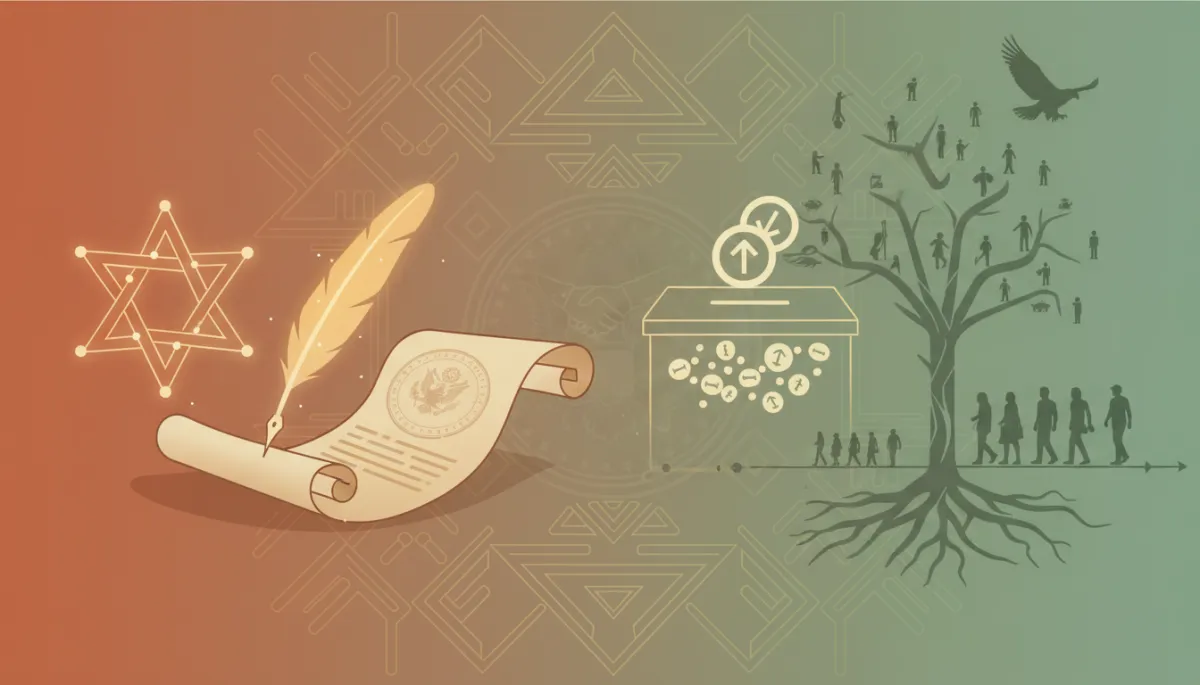
Stay Woke: Indigenous Nations & Democracy Legacy
History, Indigenous Nations, Democracy, Voting Rights
STAY WOKE. BUILD LEGACY.
To build a just legacy, we have to tell the whole story of democracy on this land — including the Indigenous Nations whose ideas, treaties, and struggles helped shape the United States, yet are too often left out of the narrative.
Indigenous Nations: Democracy Before “Democracy”
Long before the United States declared independence, Indigenous Nations had complex political systems, diplomatic protocols, and philosophies of shared responsibility. From the Pacific Northwest to the Southeast, Native societies practiced forms of governance that balanced individual rights with communal obligations and respected relationships with land and water as living relatives, not property. These were not “primitive” structures — they were sophisticated, time-tested systems built over centuries.
Among these, the Haudenosaunee Confederacy — known to many as the Iroquois Confederacy, including the Mohawk, Oneida, Onondaga, Cayuga, Seneca, and later the Tuscarora — stood out as a powerful model of unity and shared governance. Their Great Law of Peace offered a vision of nations bound together not by conquest, but by mutual agreement and responsibility.
The Haudenosaunee and the U.S. Constitution
Many historians and Haudenosaunee knowledge keepers point to the influence of the Confederacy on early American political thinkers. Benjamin Franklin, for example, observed Haudenosaunee diplomacy and wrote about their ability to maintain unity among several nations. The idea that separate political entities could come together under a shared framework while retaining their own identities resonated with colonists imagining a union of states.
While scholars debate the exact degree of direct influence on the U.S. Constitution, there is broad agreement that Haudenosaunee governance offered a living example of federalism, checks on power, and consensus decision-making. The very notion that a confederation of distinct nations could function effectively challenged European assumptions and helped open space for new political experiments. Recognizing this influence does not diminish the Constitution’s European roots; it completes the picture by acknowledging Indigenous intellectual traditions that helped shape what would become the United States.
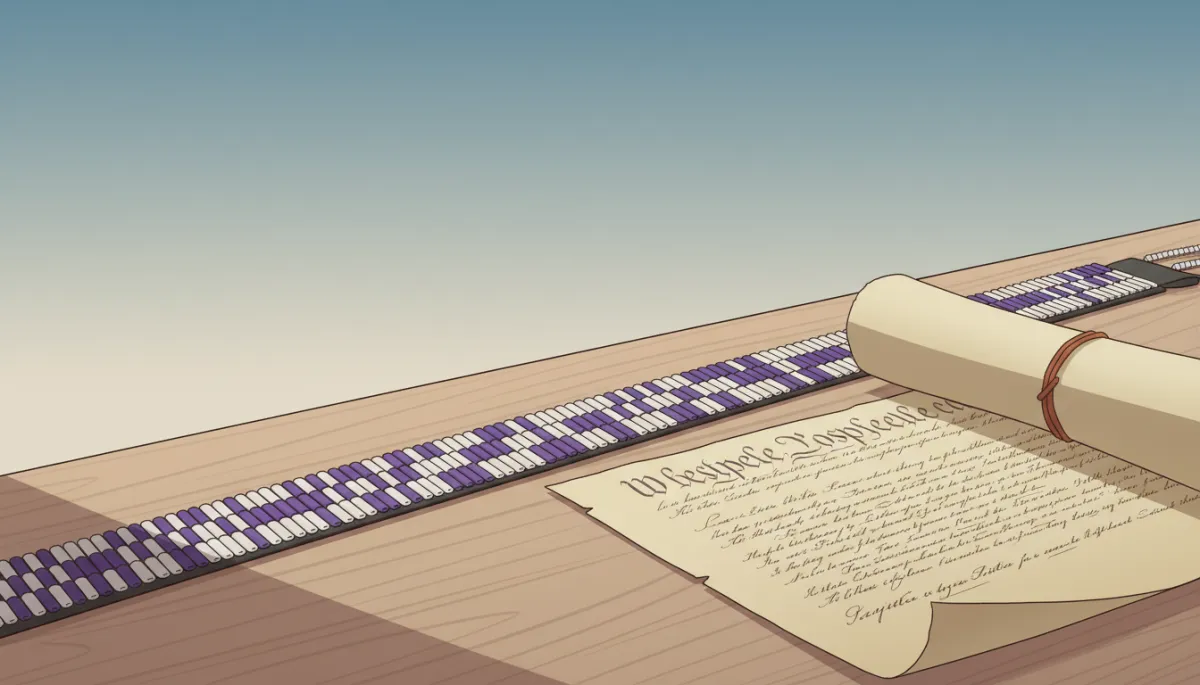
Placing Haudenosaunee diplomacy beside the Constitution reveals a deeper, shared story of governance.
Naming and Honoring Native Contributions
For generations, U.S. textbooks largely ignored or distorted Indigenous contributions. Native Nations appeared briefly at the “beginning” of history, then vanished as the story moved on to presidents, wars, and industrial growth. This erasure is not accidental; it protects myths of a young nation inventing democracy in a vacuum and sidesteps uncomfortable truths about land theft, broken treaties, and attempted cultural genocide.
Recognition matters. When we credit Indigenous Nations for their intellectual, political, and cultural leadership, we challenge the idea that Native peoples exist only as victims or relics of the past. We affirm them as co-authors of democratic thought on this continent — and as sovereign nations still shaping its future.
💡 Key Insight: Recognizing Indigenous contributions is not “extra credit” history; it is essential to understanding how democracy actually developed here.
Native Nations’ Sovereignty and the Power of Treaties
At the heart of this story is sovereignty. Native Nations are not simply “interest groups” within the United States; they are distinct political entities with inherent rights to self-govern, recognized in the U.S. Constitution and in hundreds of treaties. These treaties — nation-to-nation agreements — affirm that the United States did not “grant” Native peoples their rights. Those rights existed long before, and treaties were meant to formalize relationships, boundaries, and mutual obligations.
Yet, the impact of treaties is a story of both promise and betrayal. While they legally recognize Native sovereignty, the U.S. government has repeatedly violated or ignored them — seizing land, restricting movement, and undermining Native governance. The legacy of broken treaties is not just historical; it shapes present-day struggles over land rights, water protection, and jurisdiction in Native communities across the continent.
📌 Key Takeaway: To honor sovereignty is to treat treaties as living commitments, not outdated documents.
The Long Road to Native Voting Rights
Despite their foundational role in shaping this land’s political landscape, Native people were shut out of the U.S. political system for generations. The Indian Citizenship Act of 1924 finally recognized Native people as U.S. citizens, but citizenship did not automatically guarantee the right to vote. States used residency rules, literacy tests, and outright racial discrimination to block Native voters well into the 20th century.
Some states did not fully secure Native voting rights until the 1960s and 1970s, long after the passage of the Voting Rights Act. Even today, Native communities face barriers: distant polling places, lack of residential street addresses on reservations, limited language access, and targeted voter suppression laws. The “long journey” toward Native voting rights is not just a chapter we can close; it is an ongoing struggle that demands vigilance and solidarity.
Democracy Demands We Know This History
When we talk about “protecting democracy” without acknowledging Indigenous history, we defend something incomplete. Democracy in the United States has always been contested terrain — expanded by the courage of those excluded from it. Understanding Indigenous governance traditions, the Haudenosaunee influence, the meaning of treaties, and the fight for Native voting rights changes how we see our institutions. It reminds us that democracy is not a finished product handed down from a few founders; it is a living practice shaped by many peoples, over time, in struggle and in dialogue.
⚠️ Reminder: Ignoring Indigenous stories is not neutral — it quietly repeats the injustices those stories reveal.
Stay Woke, Build Legacy: Justice and Shared History
To “stay woke” in this context is to stay alert to the ways Indigenous Nations have been both central and sidelined in the story of American democracy. It means learning whose ideas were borrowed without credit, whose lands were taken despite treaties, and whose voices are still obstructed at the ballot box. Wokeness, at its best, is not a trend; it is a commitment to truth and responsibility.
Building legacy, then, is about more than personal success or patriotic pride. A legacy rooted in justice and shared history asks: How are we supporting Native sovereignty today? Are we defending voting rights in Native communities? Are we teaching young people that the Haudenosaunee Confederacy and other Indigenous Nations are not footnotes, but foundational to the story of democracy here?
To build that kind of legacy, we can:
Support Native-led organizations working on voting rights and civic engagement.
Advocate for honoring treaties and respecting tribal jurisdiction in law and policy.
Learn from Indigenous scholars, elders, and communities about governance, mutual responsibility, and care for the land.
STAY WOKE. BUILD LEGACY. is an invitation: to remember that democracy on this land did not begin in 1776, and it will not endure by forgetting the Indigenous Nations who helped shape it and who continue to fight for their rights within it. A just legacy is one that tells the whole story — and acts on it.
