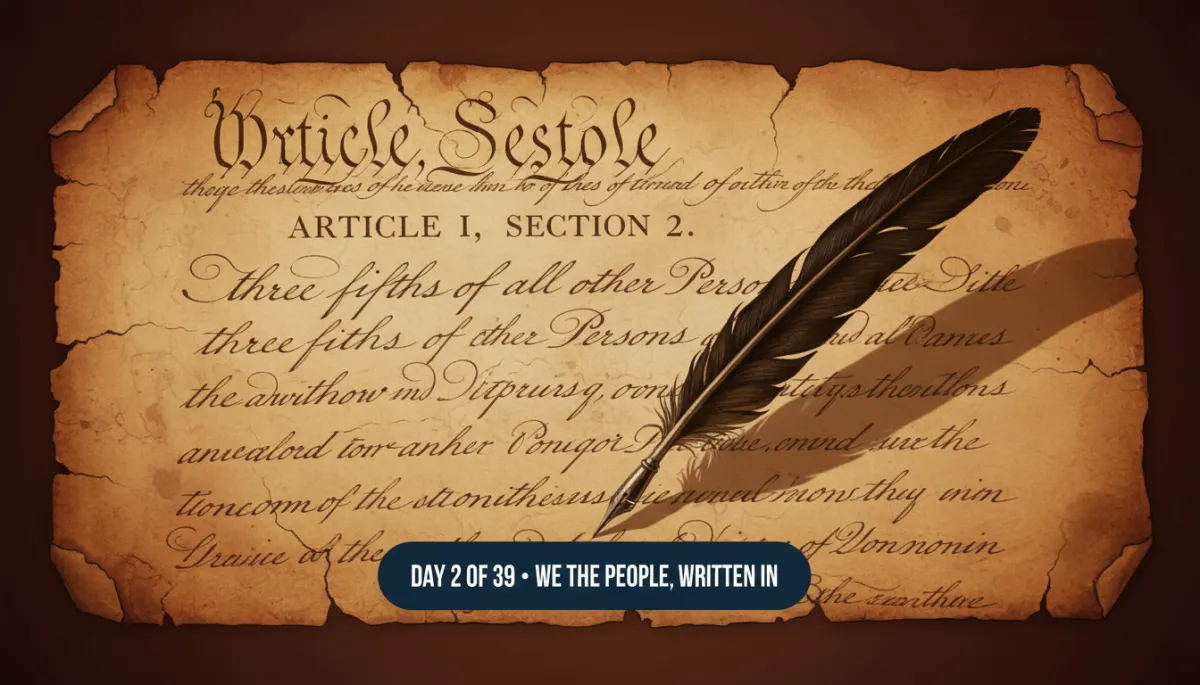
Understanding the Three-Fifths Compromise
DAY 2 OF 39 • WE THE PEOPLE, WRITTEN IN
Civic Education, Three-Fifths Compromise, Voting History
Counted but Not Heard: The Three-Fifths Compromise
What if your family counted in a census — but none of you could vote? Take a second and picture that at your own kitchen table. The government writes your names down, uses your bodies to give someone else more power, but never asks what you think. That is the story behind the Three-Fifths Compromise explained in this post. The word “slave” never shows up in the original Constitution, but slavery in the Constitution is everywhere, hiding in careful, coded phrases. Tonight, we are going to unpack what Article 1 Section 2 really said, how it turned enslaved people into political numbers, who gained power from it, and how the 14th Amendment apportionment rules finally broke that system on paper. Then we will connect it to why census and representation still matter for our families right now.
The Hidden Language of the Constitution
Let’s start with the words. The framers could have written “slaves.” They chose not to. In Article 1 Section 2, they used the phrase “all other Persons” instead. That was not an accident. It was a way to talk about enslaved Africans and their children without saying who they were or how they lived. The Three-Fifths Compromise said that, for counting population, each enslaved person would be counted as three-fifths of one person. Many people today think that meant Black people were three-fifths human. That is not what the math was about. The compromise was about political power and taxes. White leaders were arguing over how many seats in Congress each state would get and how much each state would pay. Enslaved people were treated as numbers on a page, not as neighbors with voices, dreams, and rights.
Who Actually Gained From It?
Here is the twist most textbooks rush past. The Three-Fifths Compromise did not punish the slave states. It rewarded them. Without the deal, enslaved people would not have been counted at all for representation. With the deal, those same people were counted just enough to boost the power of the people who claimed to own them. Southern states could say, “Look how big our population is,” and send extra representatives to Congress. But the enslaved themselves could not vote, could not hold office, and often could not even speak in court. Imagine your body helping someone win an election while you stay locked out of the voting booth. Virginia, with hundreds of thousands of enslaved people, became the most powerful state in the early republic. Four of the first five presidents were Virginia slaveholders. Their power sat on the backs of people who never chose them.
The 1790 Census and What It Revealed
Just three years after the Constitution was written, the new government took the first U.S. census in 1790. This is where the math of power shows up in ink. People were sorted into five groups: free white men, free white women, other free persons, slaves, and all other persons. There were 694,280 enslaved people counted that year. Think about that number for a second. Each one was a whole person, but in the records they show up as lines in a column, like livestock or furniture. Those lines helped slaveholding states grab more seats in Congress and more say over laws that controlled the whole country. When we study census and representation today, we can see a long line from those early lists to fights over who gets counted now, who gets ignored, and whose communities get less money, fewer polling places, and weaker voices.
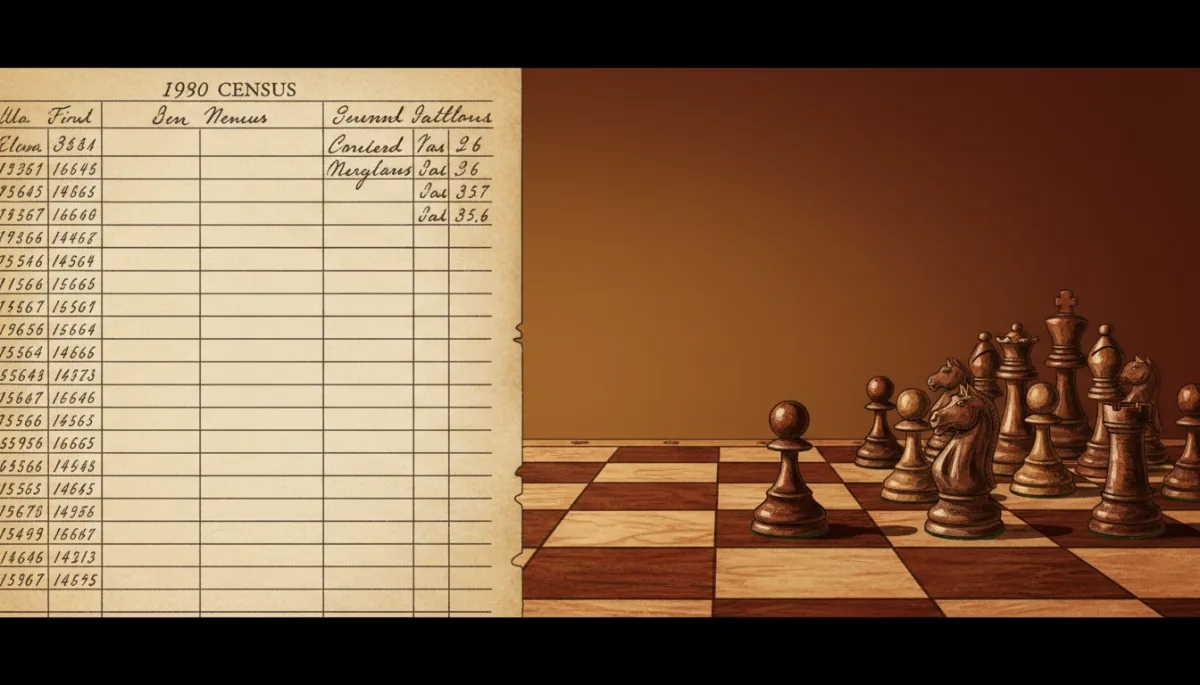
Being counted on paper did not mean having any real power or voice.
The 14th Amendment Changes Everything
After the Civil War, the country had to face what it had written into its founding rules. The 13th Amendment ended slavery in 1865, at least on paper. Then the 14th Amendment in 1868 said that all persons born or naturalized in the United States are citizens. It also changed how seats in Congress were divided, saying states would be counted by “the whole number of persons.” That line officially ended the Three-Fifths Compromise. No more three-fifths math. Every person was supposed to count as one. Two years later, the 15th Amendment said states could not deny the right to vote because of race. Three amendments in five years tried to flip the script and rebuild the rules. But as many of our grandparents can tell you, poll taxes, literacy tests, violence, and gerrymandering showed that the law on paper and the law in practice were not the same game.
🗣️ Family Table Talk
- If you were counted in a census but could not vote, how would that feel?
- Why do you think the writers of the Constitution used “all other Persons” instead of the word “enslaved”?
- The 14th Amendment changed the rules. Can you think of a rule in your school or neighborhood that needed to change — and did?
- What does “representation” mean to our family today?
📊 This Week's Family Poll
We the People, Written In — Week 1 Poll: The Starting Line
Before this week, did you know only 6 of 100 people could vote in 1789? Take our quick family poll and tell us what surprised you most — plus get voter registration reminders for Texas.
Take the Poll →
Learning how power was counted then helps our families claim it now.
