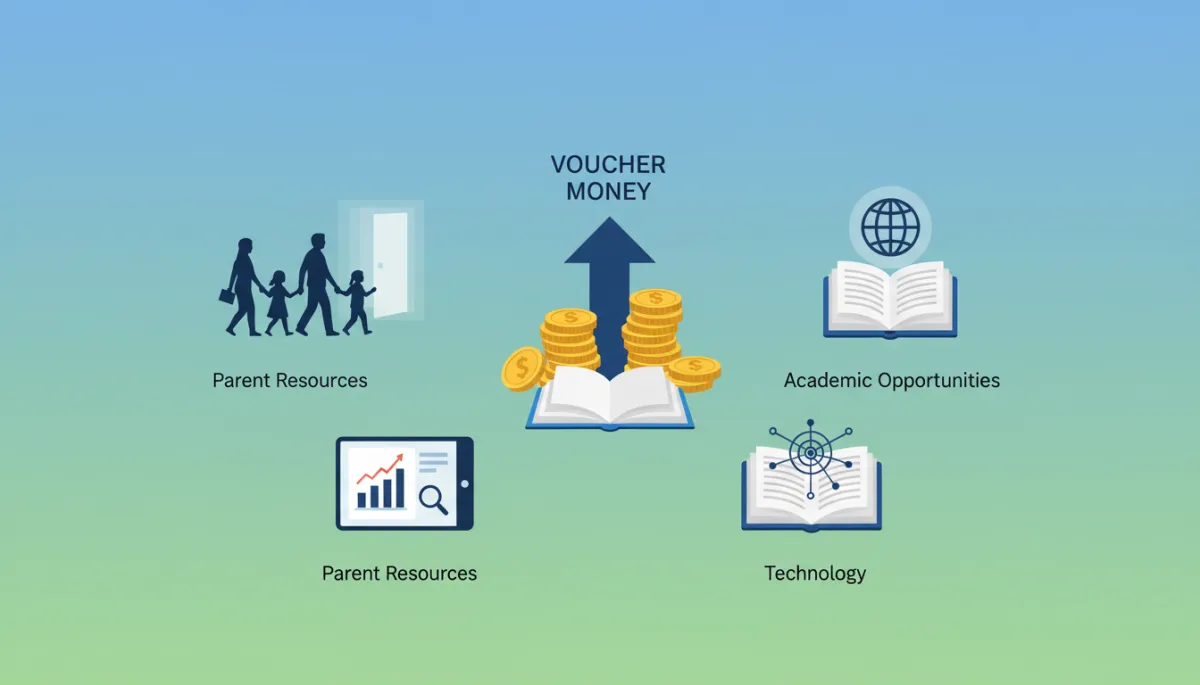
Voucher Money's Impact on Texas Education
Education, Voucher Money, North Texas, DFW, Parent Resources
How Voucher Money Is Reshaping Education Funding and Academic Opportunities in North Texas and the DFW Metroplex
If you live in North Texas, your child’s education options — and how they’re funded — are changing faster than at any point in a generation. Thousands of families across Dallas, Fort Worth, and surrounding suburbs are now seeing Voucher Money from Texas Education Freedom Accounts land in their accounts, opening doors to private schools, homeschools, and microschools that once felt out of reach. That shift raises urgent questions: What happens to neighborhood public schools? Who really benefits? And how can DFW parents make wise, equitable choices in this new landscape of education funding and academic opportunities? For a broader look at how these shifts compare nationally, see our guide on school choice and voucher programs across the U.S..
Navigating Voucher Money in North Texas
Making informed choices about education funding, microschools, and homeschool pathways with BEAM Microschool and BEAM H2O support in the DFW area
A New Chapter: Voucher Money Comes to North Texas and DFW Families
For the 2026–27 school year, Texas has moved from debating school vouchers to fully implementing them. Through the Texas Education Freedom Accounts (TEFA), families across the state — especially in the Dallas–Fort Worth (DFW) metroplex — are receiving voucher money that can follow students to private schools, pre-K programs, homeschools, and microschools. Nearly 73,000 students statewide received their first installment on July 1, 2026, with North Texas families in districts like Dallas ISD, Fort Worth ISD, Arlington ISD, and Plano ISD representing some of the largest shares of participants. For more context on how TEFA fits into Texas’ broader reforms, explore our overview of recent Texas education funding changes.
Axios reporting in mid-August 2026 shows that families living within large urban districts such as Dallas ISD and Fort Worth ISD make up major clusters of TEFA recipients. That reality raises key questions for North Texas: Who is accessing these new funds? How does this shift interact with already strained public school budgets in Dallas, Fort Worth, Arlington, and nearby suburbs? And most importantly — how can you use this education funding to create meaningful, sustainable academic opportunities for your child in North Texas’ diverse school landscape? If you’re weighing district versus choice options, our piece on comparing DFW school choice pathways can help.
📌 Key Takeaway: Voucher Money in North Texas is already in family accounts from Dallas to Fort Worth and is actively reshaping educational choices for the 2026–27 school year.
Understanding TEFA: How Voucher Money Works in Practice
TEFA is Texas’ first statewide education savings account program — a type of voucher that deposits public dollars into individual student accounts. For 2026–27, the state set the core award at $10,474 per child for students attending participating private schools or approved pre-K and kindergarten programs. Students with disabilities who have an active Individualized Education Program (IEP) may receive up to $30,000 in annual support, while homeschooled or microschooled students can receive $2,000 per year for approved expenses. If you’re new to ESAs, our explainer on education savings accounts versus traditional vouchers breaks down the key differences.
Rather than sending this money directly to schools, the state loads funds into secure digital accounts managed through the TEFA Marketplace. Families can then direct payments to tuition, tutoring, textbooks, therapies, uniforms, and other eligible services. For private school students, money is disbursed in three installments — 25% in July, 25% in October, and the remaining 50% in February, contingent on continued enrollment in an approved school. Homeschool and microschool students receive their full $2,000 on July 1, giving them more flexibility to plan for the year ahead — a crucial feature for families coordinating schedules and resources across the sprawling DFW region. To learn how other parents are budgeting these funds, read our guide on creating a TEFA spending plan.
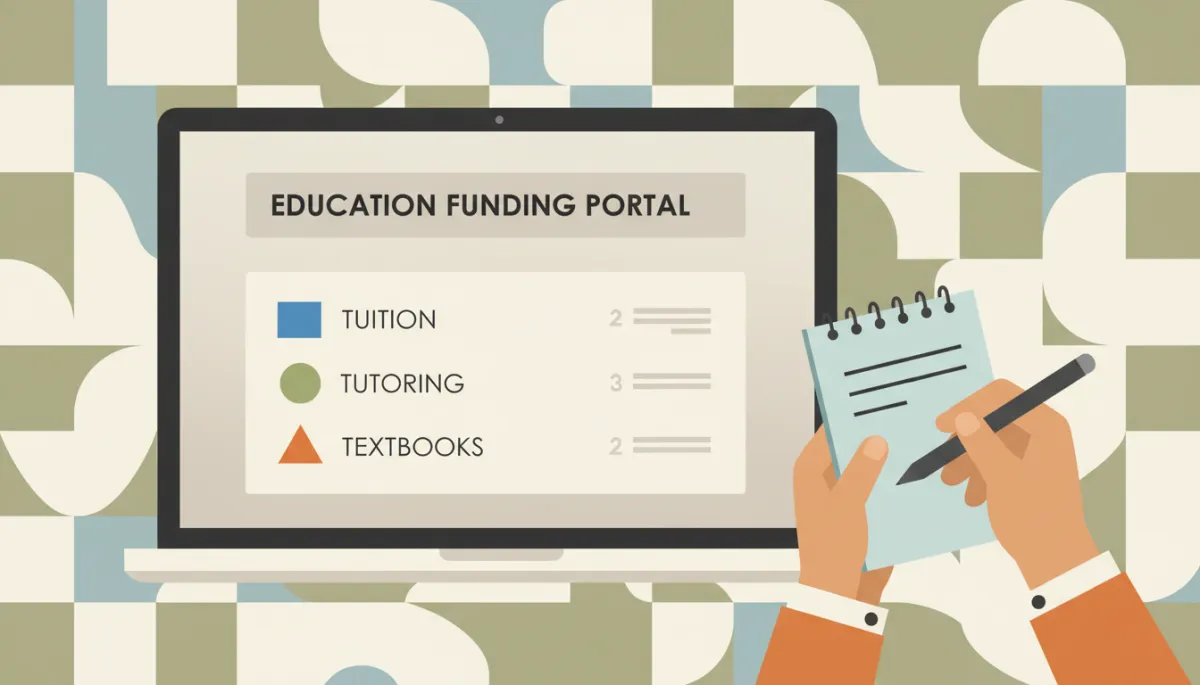
The TEFA Marketplace centralizes Voucher Money so North Texas parents can direct funds to approved educational expenses.
North Texas by the Numbers: Who Is Receiving Voucher Money in DFW?
North Texas has emerged as one of the epicenters of TEFA participation. Education Service Center Regions 10 and 11 — which include Dallas ISD, Fort Worth ISD, Arlington ISD, Plano ISD, Irving ISD, Grand Prairie ISD, Lewisville ISD, Frisco ISD, Keller ISD, and many others — saw tens of thousands of families apply for voucher money in the first application window. Early state reports and local coverage indicate that students living inside Dallas ISD and Fort Worth ISD boundaries account for some of the largest concentrations of TEFA users in Texas, underscoring both the demand for school choice and the pressure on local public schools already managing enrollment declines and budget gaps. For a deeper dive, see our data snapshot on TEFA participation in DFW districts.
On the provider side, hundreds of North Texas and DFW-area schools and early education centers have been approved to accept TEFA funds — from neighborhood church-based pre-K programs in Oak Cliff and South Dallas to established private schools in Plano and Addison and specialized academies in Fort Worth and Arlington. This network spans faith-based schools, independent campuses, and specialized programs that emphasize STEM, classical education, language immersion, or unique learning models. For families in DFW, the sheer volume of options can feel empowering and overwhelming. Our step-by-step resource on comparing private and charter schools in DFW can simplify the process.
💡 Pro Tip: Before committing Voucher Money to a North Texas school, ask about accreditation, graduation outcomes, special education supports, and how the school measures student growth over time — and compare these data points across several DFW-area options.
Education Funding in Flux: What TEFA Means for DFW Districts and Beyond
While TEFA expands individual options, it also sits inside a broader conversation about education funding in Texas. The state has significantly increased its overall investment in public education for the 2026–27 biennium — dedicating more than $126 billion to education agencies and boosting the Foundation School Program by over $13 billion. Yet, even with this infusion, large districts across North Texas — including Dallas ISD, Fort Worth ISD, Arlington ISD, and other DFW systems — report ongoing financial strain driven by enrollment declines, shifts in state formulas, and the continued impact of the “Robin Hood” recapture system, which requires property-wealthy districts to send a portion of local tax revenue back to the state. For a closer look at how recapture works, visit our explainer on Texas recapture and school finance.
Recent budget cycles in Dallas ISD and neighboring districts illustrate this tension. Many North Texas districts have adopted multi-billion-dollar spending plans while still projecting structural deficits. Leaders are investing in early college high schools, P-TECH pathways, magnet programs, and technology-rich campuses designed to keep families in-district, even as they anticipate continued enrollment erosion as some families use voucher money to attend private schools, homeschools, or microschools across the DFW metroplex. That raises important equity and sustainability questions for public systems that serve the majority of North Texas students. If you’re trying to understand district-level strategies, you may also appreciate our article on how DFW districts are innovating to retain students.

Local North Texas leaders must balance Voucher Money expansion with stable public school funding and equity goals.
Equity at the Center: Who Benefits from Voucher Money — and Who Might Be Left Out in DFW?
Equity is the lens through which this policy must be viewed. TEFA was designed with income tiers and priority groups — including students from lower-income households and those receiving special education services. Many of the first awards went to families earning below 200% of the federal poverty level, which, on paper, should expand access to private options that have long been out of reach for communities in South Dallas, West Dallas, parts of Fort Worth, and older inner-ring suburbs. Some students with disabilities now have access to up to $30,000 in education funding that can support therapies, specialized instruction, and adaptive technologies beyond what a single campus might provide. For a deeper exploration of these dynamics, see our reflections on equity considerations in school choice.
At the same time, structural barriers remain for many North Texas families. Private schools are not required to accept every student, and some do not offer the full range of services that children with complex needs deserve. Transportation, work schedules, and the sheer geography of DFW can turn a “choice” on paper into an impossibility in practice. When students exit public schools, the funding that follows them can leave fewer resources for the young people who stay — often those with the highest needs. That is why voucher money must be paired with intentional policy, robust oversight, and community advocacy if we hope to expand opportunity without deepening existing gaps in our region.
📌 Key Takeaway: Equity is not automatic. Families, schools, and policymakers across DFW must work intentionally to ensure that Voucher Money expands opportunity without undermining support for students who stay in public schools.
Parent Resources: Navigating TEFA and Comparing DFW School Options
For many parents, the hardest part of TEFA is not the application — it is making sense of what comes next. With funds now available in the TEFA Marketplace, families must decide how to use their voucher money wisely. The following parent resources can help you move from confusion to clarity in a North Texas context. You can also download our companion checklist from DFW Parent School Choice Checklist to keep these steps organized.
Clarify your goals. Are you seeking smaller classes, a specific curriculum, faith-based instruction, stronger special education supports, or a safer environment? Clear priorities will help you filter school options and supplemental services across Dallas, Fort Worth, and surrounding suburbs.
Use official portals. Start with the TEFA website and Marketplace to confirm approved providers, eligible expenses, and current balances. Avoid third-party offers that are not clearly listed as authorized vendors, even if they advertise heavily in DFW parent groups or local social media.
Ask schools detailed questions. Inquire about teacher qualifications, student support teams, college and career pathways, discipline policies, and how the school responds when students fall behind academically or socially. Compare answers from multiple North Texas schools — including your current district campus and any private or charter options.
Review special education supports. If your child has an IEP or 504 plan, ask how services will be delivered, who will coordinate them, and how progress will be measured. Confirm whether the school is prepared to serve your child’s specific needs before moving your education funding, and understand how protections may differ between public and private settings in Texas.
Connect with other families. Parent networks — both formal and informal — can provide honest insights about school culture, communication, and how responsive leaders are when concerns arise. In DFW, this might include neighborhood associations, faith communities, local PTA or PTO groups, and online forums focused on North Texas education.

Parent-focused workshops and guides across North Texas can translate complex Education Funding policies into practical next steps.
Microschools, Homeschools, and New Academic Opportunities in North Texas
One of the most innovative shifts tied to TEFA is the growth of microschools and learning pods in and around the DFW metroplex. Families who receive the $2,000 homeschool or non-public student award are using those dollars to co-create small, personalized learning communities in neighborhoods from East Dallas to North Fort Worth and Collin County. These microschools often blend technology-rich instruction with project-based learning, flexible schedules, and multi-age classrooms. To explore this model further, read our feature on how to start or join a microschool in Texas.
While $2,000 will not cover a full-time private tuition, it can offset costs for high-quality online courses, curriculum subscriptions, tutoring, or specialized enrichment in areas like coding, robotics, or the arts. For families already homeschooling in North Texas, this voucher money can expand academic opportunities without requiring a full shift into a traditional private school. The key is careful planning — mapping out a year-long learning plan that aligns with state standards where appropriate, while also honoring your child’s interests, strengths, and cultural identity and tapping into DFW’s rich community resources (museums, libraries, universities, and workforce partners). Our article on designing a homeschool learning plan offers templates and examples.
💡 Pro Tip: If you are considering a microschool in North Texas, ask about governance, safety protocols, learning goals, and how student progress will be documented — especially if you may later transition back to a traditional district or charter school setting in DFW.
Technology, Transparency, and Leadership in a Voucher Era for DFW
Technology plays a dual role in this new landscape. Platforms like the TEFA Marketplace make it possible to track spending, audit accounts, and ensure that public dollars are used only for approved educational purposes. The Comptroller’s Office has committed to multiple layers of oversight, including internal audits, independent reviews, and monitoring by the State Auditor’s Office. This level of transparency is essential for maintaining public trust in a program that moves substantial education funding outside traditional district budgets — including those of major North Texas systems like Dallas ISD and Fort Worth ISD. For more on digital accountability tools, see our article on how technology is improving education funding transparency.
Technology is also reshaping what learning itself looks like. DFW-area districts are investing in one-to-one devices, blended learning models, and career-connected pathways, while private schools and microschools across North Texas use digital tools to customize instruction, track mastery, and connect students with global content and communities. In this moment, educational leadership in North Texas requires more than managing budgets — it demands a clear vision for how Voucher Money, technology, and human relationships can work together to create thriving, equitable learning ecosystems across the metroplex. For leadership-focused insights, explore our piece on leading schools in a digital and choice-driven era.
Making a Plan: Questions to Ask Before You Spend Voucher Money in North Texas
Whether you are just receiving your first TEFA installment or considering applying in a future cycle, it is helpful to pause before making major decisions. The questions below can guide a thoughtful approach to voucher money, education funding, and academic opportunities for your family in the DFW region. You can pair these with our downloadable planner from DFW Family Education Planning Guide.
What does success look like for my child in one year, three years, and beyond — academically, socially, and emotionally — given the specific opportunities available in North Texas?
How does each school or program I am considering — district, charter, private, homeschool, or microschool — support that full picture of success, not just test scores or college admissions?
What trade-offs will we face — financially, logistically, and relationally — if we move to a new school, microschool, or homeschool model in a region where commute times and transportation can be significant factors?
How will we stay connected to our community, including neighborhood schools and local organizations, regardless of where our Voucher Money goes in DFW?
What information or parent resources do we still need — and who in North Texas (school counselors, community groups, advocacy organizations, or education consultants) can we ask for support in interpreting policies, contracts, and financial commitments?
Looking Ahead: Building an Equitable Future in a Voucher World for North Texas
North Texas’ experience with TEFA is still unfolding. Demand remains high, with tens of thousands of students on statewide waitlists and policymakers watching closely to see how voucher money affects enrollment, teacher pipelines, and long-term academic outcomes in the DFW metroplex. At the same time, Texas is overhauling special education funding, moving from a setting-based formula to a service-intensity model expected to add $250 million statewide — a change that could better align resources with student needs in both public and non-public settings, including those serving North Texas students. For families following these policy shifts, our article on Texas’ new special education funding model provides additional detail.
In this complex environment, families, educators, and community leaders share a common responsibility: to ensure that education funding — whether routed through districts or TEFA accounts — advances equity, strengthens learning communities, and expands, rather than narrows, academic opportunities for all students in North Texas. That work will require transparent data, honest dialogue about who is benefiting and who is not, and a commitment to centering students’ humanity in every decision.
As you navigate this moment as a parent or caregiver in the DFW area, remember that you are not alone. Seek out trusted parent resources — from school counselors and community organizations to independent education consultants and advocacy groups rooted in North Texas — who can help you interpret policies, compare options, and design a plan that reflects your family’s values and your child’s aspirations. Voucher Money is a tool, not a destination. The real goal is a learning journey that prepares every North Texas student to lead, innovate, and thrive in a rapidly changing world. For stories and case studies, visit our collection on North Texas family education journeys.
Frequently Asked Questions: Voucher Money and Education Funding in North Texas
This FAQ section addresses common questions North Texas and DFW-area families have about how Voucher Money and TEFA work, and how these changes may affect school choices, budgets, and academic opportunities across the region. For a printable version of these FAQs, see our resource at DFW Voucher & TEFA FAQ.
1. What is the difference between TEFA and traditional school vouchers?
TEFA is an education savings account (ESA) model rather than a simple tuition coupon. Instead of sending money straight to a private school, the state deposits funds into a secure account for each eligible student. Families in North Texas can then use that voucher money on a wider range of approved expenses — including tuition, tutoring, therapies, curriculum, and some homeschool or microschool costs — all managed through the TEFA Marketplace. Our in-depth comparison of ESA pros and cons for families can help you decide which features matter most for your situation.
📌 Key Takeaway: TEFA offers more flexibility than a traditional voucher but also requires families to actively manage how funds are spent.
2. How much Voucher Money can my family receive, and does it depend on where we live in DFW?
The award amounts are set statewide, not by district. For 2026–27, most students attending participating private schools or approved early childhood programs can receive $10,474 per year. Students with disabilities who have an IEP may receive up to $30,000, and homeschooled or microschooled students can receive $2,000 annually for eligible expenses. Where you live in North Texas — Dallas, Fort Worth, Arlington, Plano, or another DFW community — affects which schools and services are nearby, but not the base TEFA award level. If you’re unsure whether you qualify, our step-by-step article on how to apply for TEFA in Texas walks through eligibility and documentation.
3. How does Voucher Money impact funding for my local public school district?
When a student leaves a traditional public school and uses TEFA funds elsewhere, a portion of the state education funding that would have supported that student in-district follows them to their new setting. Over time, this can contribute to enrollment declines and budget pressure in districts like Dallas ISD, Fort Worth ISD, and other North Texas systems, especially if many students exit at once. However, the state has also increased overall education spending, which helps offset — but does not fully erase — the financial impact on some districts.
"Families see new choices, while districts must stretch dollars further for the students who remain."
— Adapted from analyses by the Texas School Finance Commission and research summarized by the Learning Policy Institute
4. Are all private schools in North Texas required to accept TEFA funds?
No. Participation is voluntary. Private schools, early education centers, and microschools must apply and be approved as TEFA providers. Even if a school is approved, it can still set its own admissions criteria and may not have the capacity or services to support every student, particularly those with complex needs. Families in DFW should always confirm that a school is listed in the TEFA Marketplace and ask detailed questions about admissions, supports, and costs before committing their Voucher Money. Our checklist on questions to ask private and microschools can help you prepare for tours and interviews.
💡 Pro Tip: If a school is hesitant to answer questions about special education, transportation, or fees, consider that a red flag when deciding where to send your TEFA funds.
5. What can homeschool and microschool families in DFW actually buy with the $2,000 award?
Homeschool and microschool families can use their $2,000 on a range of approved educational expenses, such as curriculum, online courses, tutoring, testing, and certain enrichment activities. The funds cannot be spent on general household costs or unapproved services. Because the award does not cover full-time tuition, many North Texas families use it to supplement existing homeschool plans — adding high-quality materials, specialized classes, or targeted support in areas like math, reading, or STEM. For sample shopping lists and vendor ideas, see our guide on best ways homeschoolers can use TEFA funds.
6. How does TEFA address equity for low-income families and students with disabilities in North Texas?
TEFA includes priority groups and income tiers intended to direct Voucher Money toward students who have historically had fewer options. Many initial awards went to families below 200% of the federal poverty level, and students with disabilities can access higher funding levels for therapies and specialized services. However, equity is not guaranteed. Transportation, admissions practices, and limited program capacity can still make it hard for some DFW families to fully benefit, even when they qualify on paper.
📌 Key Takeaway: TEFA can expand access, but families and advocates across North Texas must stay engaged to ensure that the most vulnerable students are not left behind.
7. What protections or rights change if my child leaves a public school for a private school using Voucher Money?
Public schools operate under federal laws such as IDEA and Section 504, which provide specific rights and procedural safeguards for students with disabilities. Many private schools do not have the same obligations. When families in North Texas move their child from a district like Dallas ISD or Fort Worth ISD to a private school using TEFA funds, they may gain flexibility but lose some formal protections. It is crucial to ask how supports will be delivered, documented, and reviewed in the new setting. For a detailed comparison, review our article on student rights in public versus private schools.
“Parents should understand that when they accept a voucher, they are often trading some statutory rights for increased choice.”
— National Council on Disability, Choice & Vouchers: Implications for Students with Disabilities
8. How can I make sure I am using Voucher Money responsibly and avoiding fraud?
The safest approach is to stay inside the TEFA Marketplace and follow all guidance from the Comptroller’s Office. Only pay approved vendors, keep digital records of purchases, and review your account regularly. Be cautious of offers that promise to "maximize" your funds or move money outside the official system — especially if they are advertised in social media groups or through unsolicited messages. Misuse of funds can lead to account suspension, repayment requirements, or legal consequences. Our checklist on avoiding voucher and ESA fraud outlines common red flags.
💡 Pro Tip: When in doubt, contact TEFA support directly or ask a trusted school counselor or community organization in North Texas to help you verify whether a service is eligible.
9. What questions should I ask schools in DFW before directing my Voucher Money to them?
In addition to basics like tuition and fees, consider asking:
How do you measure student growth and communicate progress with families?
What supports are available if my child struggles academically, socially, or emotionally?
How diverse is your student body and staff, and how do you create an inclusive school culture?
What happens if we decide to leave mid-year — academically and financially?
Comparing answers across district, charter, private, homeschool, and microschool options in the DFW area will help you decide where your education funding is most aligned with your child’s needs and your family’s values. For a ready-made interview guide, check out our resource on DFW school visit questions.
10. Where can I find trusted parent resources in North Texas to get personalized guidance?
Start with school counselors at your current campus, who can help you understand academic records, supports, and transition options. Many community organizations, faith-based groups, and advocacy networks in Dallas–Fort Worth also host workshops on TEFA and school choice. Independent education consultants and special education advocates can provide more individualized support, especially for students with complex needs. Whenever possible, seek out groups that are rooted in North Texas and familiar with the local school landscape, transportation realities, and policy context. You can find a curated list of organizations in our directory of North Texas parent support and advocacy groups.
📌 Key Takeaway: You do not have to navigate Voucher Money decisions alone — building a small team of trusted advisors in DFW can make the process clearer and less stressful.


