What a New AI Report Tells Us About Our Children -- and the Relationships That Will Guide Them
By Dr. Andrea Long-Nelson, President of B.E.A.M. Education
This week, a business school in Washington, D.C. released something worth pausing over. The Kogod School of Business at American University published a three-year study of how its students are using artificial intelligence. I read it not as a business report, but as a mother, an educator, and a builder of learning ecosystems. And what I found there is a story about our children, our classrooms, and the relationships that will shape what happens next.
Let me share what stood out, and then let me tell you why I am hopeful rather than fearful.

Our young people are already in the room with this technology
More than eight in ten students in the study said they had used AI tools for schoolwork in the past six months. Nationally, the picture is the same. A separate 2026 report found that eighty-five percent of this graduating class used AI during college, yet only twenty-eight percent were ever formally taught how to use it well.
Read that again. Our children are already using these tools every single day. What most of them have never been given is guidance. They have the environment. What they are missing is the ecosystem.
In the Kogod study, the number one way students use AI, across all three years, was not to cheat. It was to brainstorm. They reach for it to start thinking, to organize their ideas, and to find their footing on a hard assignment. That tells me something beautiful about our young people. Given the choice, most of them want to begin the work, not skip it.
The world is already asking them about it
Here is the part that every parent should hold close. In 2024, only about twelve percent of these students said an employer had asked whether they could use AI. By 2026, that number had climbed to nearly forty-three percent. In two short years, AI moved from a nice extra to something the working world now expects.
Our children are walking toward doors that did not exist when many of us finished school. We can pretend those doors are not there, or we can prepare our young people to walk through them with confidence and character.
And they are asking the right questions
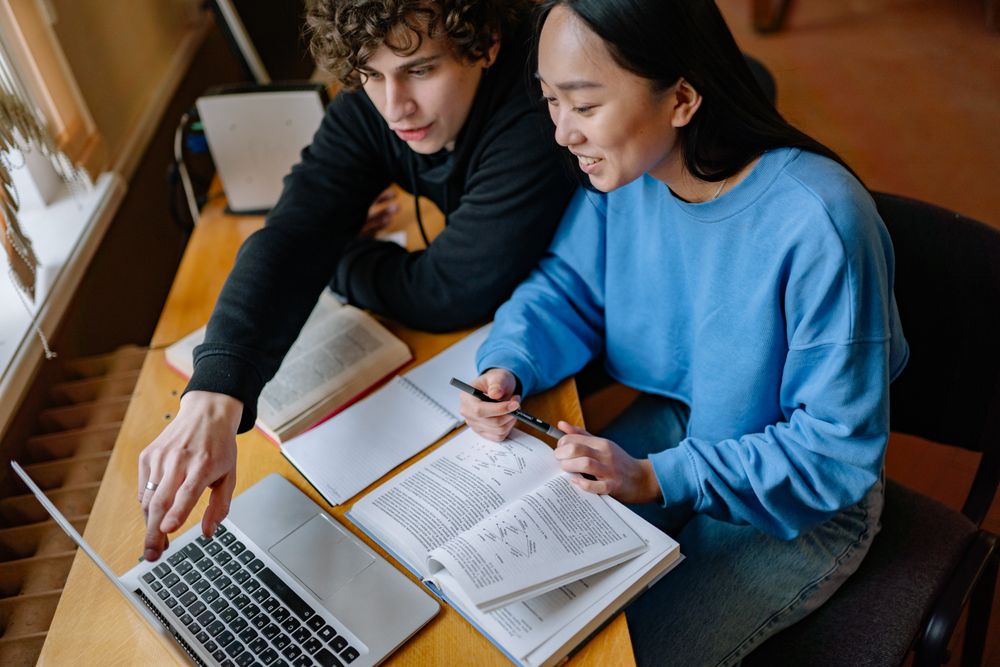
This is what gave me the most hope. Nearly half of the students in the study said they worry about honesty, about doing their own thinking, and about leaning on the tool too much. The skill they most want to be taught is not how to trick the machine. It is how to prompt it wisely, how to judge what it gives back, and how to think clearly for themselves.
Our children are not asking to be handed a shortcut. They are asking to be taught good judgment. That is a request every caring adult should be honored to answer.
A tool is only as good as the relationship around it
Here is the heart of what I believe. A phone, a laptop, an AI tool -- these are spaces. They can hold a child for hours and still leave that child alone. What changes a life is never the space. It is the relationship inside it.
Environments are spaces. Ecosystems are relationships. And relationships are where transformation happens.
-- Dr. Andrea Long-Nelson
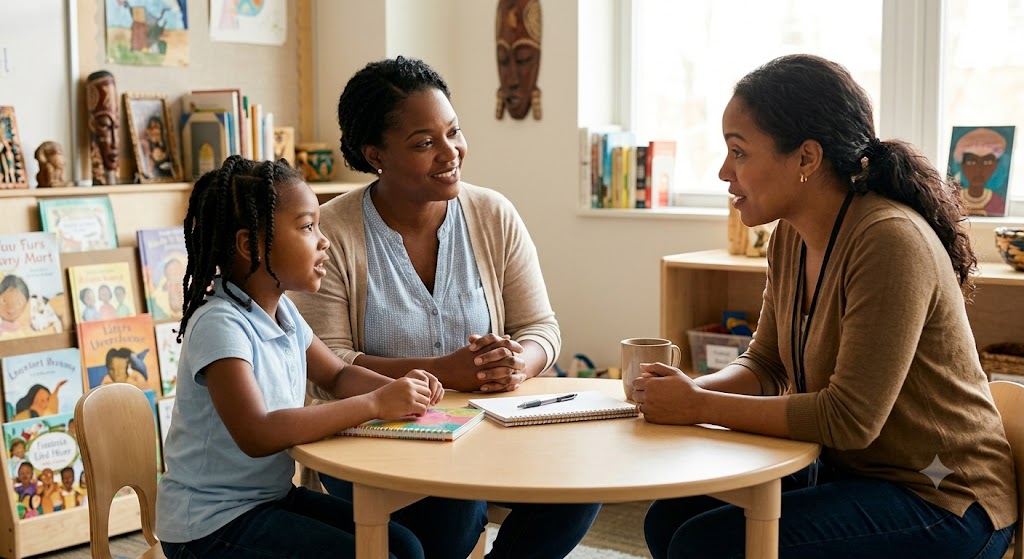
When a caring teacher sits beside a student and asks, why did you accept that answer, what did the tool get wrong, what do you still need to check -- that is the moment learning happens. The AI did not teach the child. The relationship did. The tool simply gave them something to think about together.
That is why I am not afraid of this technology in the hands of our young people. I am only concerned when we hand them a powerful tool and no guiding hand. A device with no mentor is just a very fast way to be lonely and misled. A device inside a strong learning ecosystem is a doorway.

Photo: Pexels
What we are building at B.E.A.M.
At B.E.A.M. Education, we do not treat technology as the teacher and we do not treat it as the enemy. We treat it as one more tool inside a relationship built on trust. We teach our children to ask hard questions of what a machine tells them. We teach them to keep their own voice. We teach them that their thinking is the treasure, and every tool serves that thinking rather than replacing it.
The Kogod report confirmed what we have believed all along. Our young people are ready. They are curious, they are honest about their worries, and they are hungry to be taught well. The question is not whether our children will use these tools. They already do. The question is whether they will have caring adults beside them while they learn.
Let us be those adults. Together.
Walk with us.
Learn more about B.E.A.M. Microschool Academy and our founding families at www.beammicroschool.org.
Support our work with a tax-deductible gift at www.beameducation.org.
Have a young learner ages five to ten? Introduce them to us at www.beamh2o.org.


